Posts Tagged ‘Ayahuasca’
Feb
20

In his quest to experience the ancient hallucinogenic ceremony of ayahuasca, HAMISH MITCHELL COTTS flew from Lima to the ancient Peruvian capital of Cusco. That was followd by a 10-day trip into Manu Park—1.5 million hectares of pristine forest in the Amazon basin. The Manu River was made famous by the film Fitzcarraldo. He then hired a guide and drove another 14 hours along the surfaced road before being picked up by a dug-out canoe.

As I made my way to Darikiking’s hut in the forest at dusk,  the torrential rain having subsided after failing unremittingly with a terrible sense of foreboding: was this the last stop on a one-way ticket to the heart of Darkness?
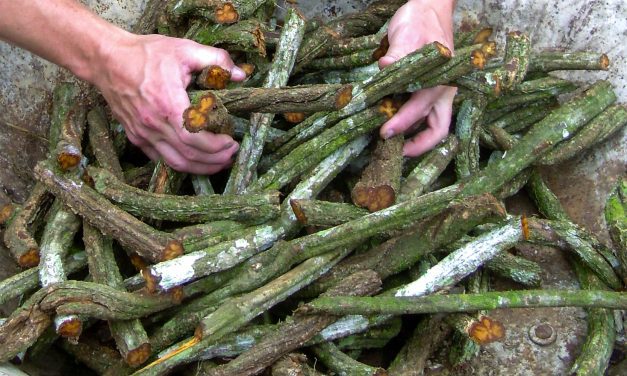
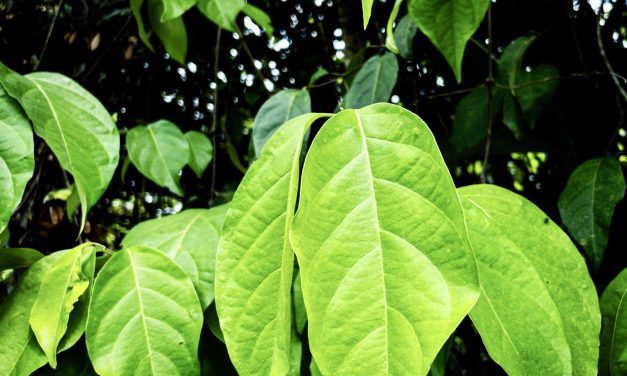
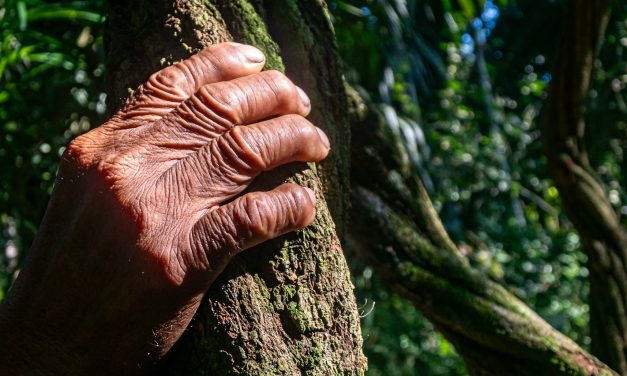
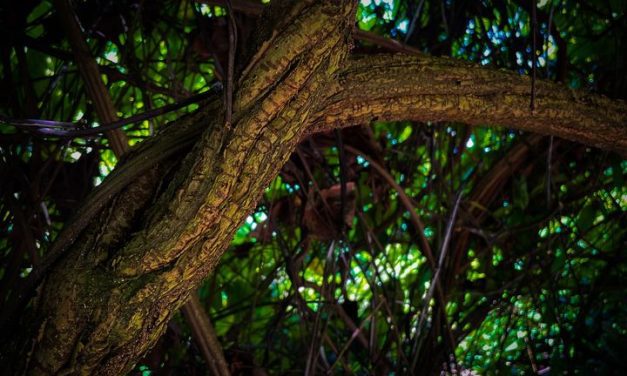
Darikiking was an Amazon Indian Shaman who hag agreed to perform the ayahuasca ceremony fir me, Ayahuasca (Dead man’s vine) or Banisteriopsis Caapi, is a liana famous for its apparent ability to produce out-of-body experiences.  It was first identified by the British Botanic Richard Spruce, who sent samples back to Kew in the 1850’s. The bark of the vine which contains a number of hallucinogenic alkaloids is prepared as an infusion with other psychoactive plants and used ritually by the Indians. Its active principle known as “telepathine”, is said to induce a state of clairvoidance and a belief that the user can foretell the future.

The impetus for this journey began in 1971 when I read the teachings of Don Juan by Carlos Castaneda who was an anthropology student at UCLA met a Yaqui Indian shaman on a field trip to Mexico and became his apprentice. In this an its sequels, Castaneda relates his bizarre and terrifying experiences from a sorcerer’s world of elementals and earth spirits. His writings were not without controversy and it was suggested by some of his less charitable critics that much of what he wrote had been concocted in his kitchen in Malibu. Ultimately, I knew I must do my own research and chose Peru, a country, like Mexico, with a strong shamanic tradition. In the weeks in which I had been in the country I had spent my time perambulanting along the piranha infested headwaters of the Amazon in a dugout canoe and acclimatising myself to the heat, humidity and insects of the jungle. My guide a mestizo girls who, though reticent on the subject of shamanism, confided that she had been apprenticed of three years.

I expressed my great interest in the subject and after what I took to be a throughout vetting she agreed to give me an introduction to her teacher Darikiking. On arrival in his village I made my way to a wood and corrugated iron shack calling itself Hotel Pilcopata, run by a large, amiable, middle-aged lady called Señora Rubela, where I found accommodation. She sent word to Darikiking at his hut at a half-hour’s walk outside the village and some hours later he appeared, a pure-blodded Indian with strong noble features, aged around 50 and dressed on a T-shirt, shorts and an ancient pair of wellington boots. We talked at length and he agreed to perform the ayahuasca ceremony after three days’ preparation—the key to a successful ceremony to visualize the subconscious.  To take it without the requisite preparation is to risk confronting vision of Hell. For this reason he ordered me to abstain from alcohol, meat and sex and added that under no circumstances should I consider it if I were involved in any unresolved law suit. At Hotel Pilcopata Señora Rubela made it her business to feed me three enormous meals a day. Abstinence from meat was nod an issue, as the diet consisted entirely of starch — deep fried yucca, rice, potatoes and pasta with occasional fruit and vegetables

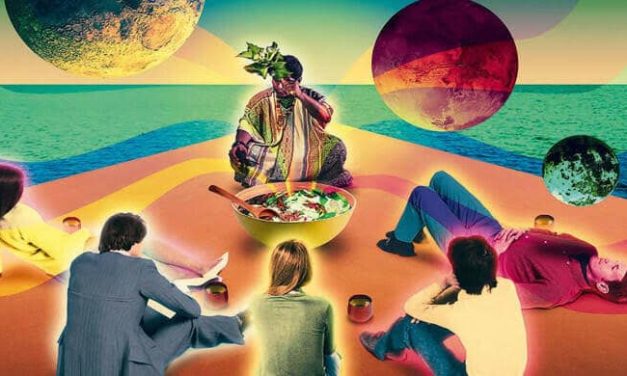
I felt like an athlete loading with carbohydrate for a psychic marathon. One day she told me how much like the Prince of Wales I was. “He too loved his food and ate mine with particular relish”, she said proudly. I put it down to delusions of grandeur and let the subject drop, but some weeks later I met her nephew, a level-headed businessman. Who swore that prince Charles had visited her house on a jungle trip 10 years earlier. Three days later, in the half light, I could just see the conical shape of the thatched roof appear in the clearing. I made my way inside the hut and sat on the dirt floor opposite Darikiking. Dressed in ceremonial robe and headdress made from the yellow tail feathers of the Oropendula bird, he lit a candle and began to arrange his power objects in front of him; a collection of strange stones, a quartz crystal, a caiman’s tail, a condor’s claw. He poured the ayahuasca liquid from a five-gallon petrol can into a chipped enamel mug and passed it to me to drink; the taste was pungent, bitter and deeply repulsive. I settled with my back to the wall and eyes closed as he extinguished the candle. Then he intoned shamanic songs, dusted me with aromatic powder and blew smoke over me from a loosely rolled cigarette. He urged me to speak to the plant and ask it to teach me. If it accepted me I h ad nothing to fear, if not I could expect a violent fit of vomiting… or worse.

As I waited, I meditated on his instructions. In his preambule Darakiking had cautioned me not to “rush on ahead” or allow myself to be sidetracked by a seductive imagery, but to stay with him. He told me that we would me linked telepathically and to listen to his shamanic songs and use them as a point of reference if all else seemed confusing.

I felt reassured that I had a guide but this was essentially why I had come all the way to Peru. Similar drugs, I am constantly told by the Press, are readily available in most London night clubs, but in our own culture hallucinogenic drugs seem to be used and abused for entirely recreational purposes.

Don Alejandro Jahuanchi died in 1998

, , ,

Feb
14

From the richness of related mythology, the utilization of Ayahuasca, pronunced eye-a-was-ca, for visionary experiences appears being primeval. Pre-Colombian rock drawings are like updated ayahuasqueros pantings, that are alleged to represent vage visions. earliest recognized record from the practices related with this botanical wasn’t set down until the middle of the 19th century.

Harmaline and other harmala alkaloids appear throughout the plant globe and are the principle psychoactive ingredient in the “magical” libation yage, recounted yah-hey. These substances are also present in cigarettes and even within the human pineal gland.

Even though these three-ringed compounds are widespread within the plant kingdom, their use as an entheogen is understood in only two particular, geographically separate practices. Initial is the scraping on the bark of Banisteriopsis vines to generate a drink inside the Amazon, and 2nd, digestion from the seeds of Syrians. The Amazonian practices are much better documented and colorfully illustrated the purgative, recovery, visible, telepathic, sexual, inventive, non secular and therapeutic potentials in entheogens.

Numerous early explorers of northwestern South America referred to ayahuasca, yage and caapi, citing a forest liana but providing tiny detail. In the early twentieth Century, it was learned the use of Banisteriopsis vines for therapeutic, initiatory and shamanic rites extended to Peru and Bolivia.

Thanks to the substantial interest inside the psychedelic practical knowledge the advent of LSD triggered reports about Ayahuasca that ordinarily would’ve been prohibited for the technical literature received reasonably broad circulation. There has been dialogue about ayahuasca, which spread the term concerning the vine and its use for divinatory and prophetic purposes.

Several analysts went to South America trying to find ayahuasqueros, expecting to possess a exclusive ayahuasca encounter. Some recounted an ayahuasca-psilocybe practical knowledge that lasted purportedly for a month from the jungle. Their engaging hopeful testimonials called consideration to ayahuasca whilst contemplating topics of mind-body interactions.

Possibly the best wide-ranging investigation with the numerous states of ayahuasca encounter comes out of the professor of Psychology on the Hebrew University in Jerusalem, Bernard Shamon. He tried the knowledge himself numerous times and interviewed locals, city folks, shamans and travellers. Shamon lays out what he suspects can be a structure that may be used for the encounter and which he also feels may be used to other entheogenic use.

Psychedelic Ayahuasca Tourism

Several groups give journeys for the Amazon with the thought of travellers taking ayahuasca under their auspices. Ayahuasca SpiritQuest, just as one instance, publicizes “transformative workshop retreats exploring the essence of usual shamanic Ayahuasca treatment practices and ethnobotany inside the center on the Peruvian Amazon.”

Jan
23

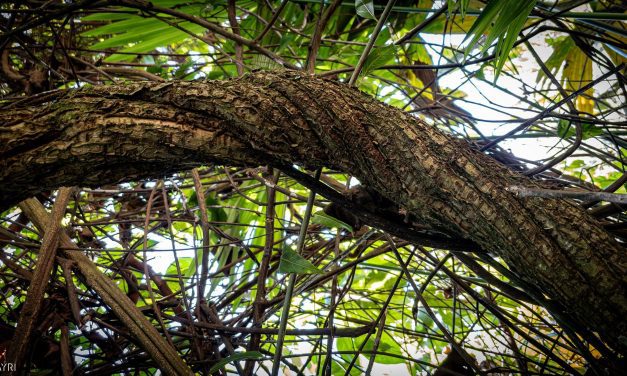
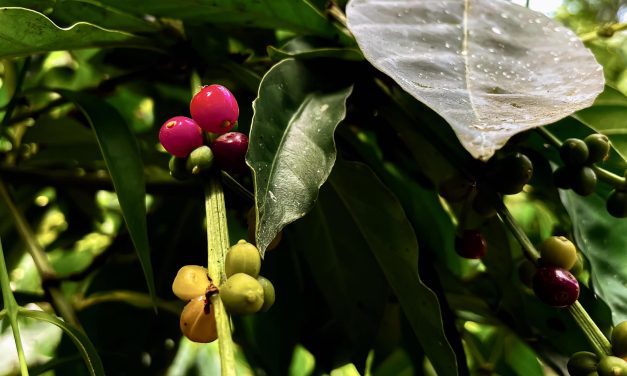
This brew, commonly called yagé, or yajé in Colombia, ayahuasca in Ecuador and Peru (Inca “vine of the dead, vine of the souls,” aya means in Quechua “spirit,” “ancestor,” “dead person,” while huasca means “vine,” “rope”), and caapi in Brazil, is prepared from segments of a species of the vine Banisteriopsis, a genus belonging to the Malpighiaceae.1

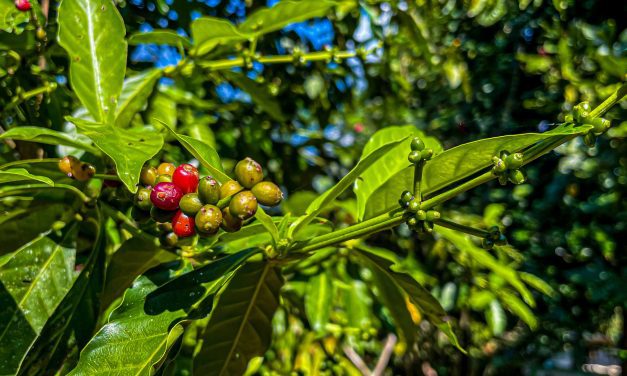
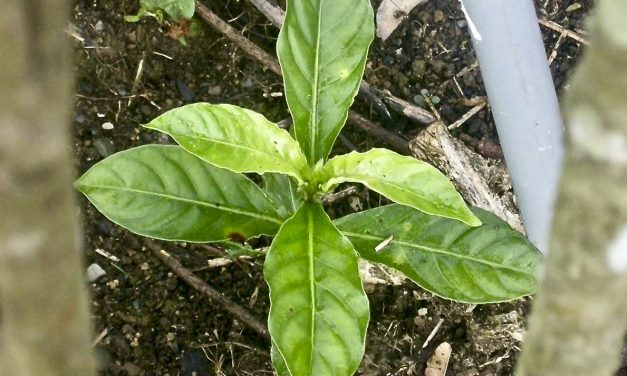
Sections of vine are boiled with leaves from any of a large number of potential admixture plants (such as Psychotria viridis, pictured above) resulting in a tea that contains the powerful hallucinogenic alkaloids harmine, harmaline, d-tetrahydroharmine, and dimethyltryptamine (DMT). Dimethyltryptamine closely resembles serotonin and has been discovered to be a component of normal mammallian metabolism, an endogenous hallucinogen. These compounds have chemical structures and effects similar, but not identical to LSD, mescaline of the peyote cactus, and psilocybin of the psychotropic Mexican mushroom. This brew has been used in the Amazon for millennia in order to heal, divine, and worship.2

With Ayahuasca, an interior sound is commonly heard, which quite often triggers a spontaneous burst of imitative vocalizings, markedly unlike any conventional human speech or facial contortions. The tryptamines can apparently trigger a kind of rippling of facial muscles, which results in the production of a vocally modulated pressure wave. What is more startling is that the sound, which gains in energy the longer it is sustained, can actually become visible—as if the vibrational wave patterns were shifting into the visible spectrum or inducing a vibrational excitation of the air in such a way as to affect light diffraction. These observations suggest that although the wave is produced with sound, it may possess an electromagnetic component. This peculiar wave phenomenon will continue to be generated out of the mouth and nostrils and will be visible in the surrounding air as long as the vocalizations are continued.3

Natives of Amazon have traditionally combined Banisteriopsis caapi vine, which contains harmine, harmaline and related beta-carbolines, with DMT-containing plants to make an orally active brew called ayahuasca. Other plants containing harmine and/or harmaline can be substituted for B. caapi. The usual ‘North-American ayahuasca’ consists of Peganum harmala seeds and Desmanthus illinoensis roots, and in Australian ‘acaciahuasca’ leaves of Acacia complanata are combined with material from DMT-containing acacias (the effectivity of this mixture hasn’t been confirmed).4

Assembled from material by 1Harner, 2Luna, 3McKenna, and 4Ott.

banisteriopsis caapi psychotria viridis
Contains—

Contains—

Resembles—

Resembles—

Source: www.deoxy.org

, , , , , , , ,

Jan
22

The best documentary of Ayahuasca Healing (English sub)

, , ,

Jan
21

Even though he was Wanamey Medicine Center concerning the Shamanism & Ayahuasca Workshop.

The workshop includes 2 Ayahuasca ceremonies, rituals, purgues, lectures,
therapies, trips, accommodation, vegetarian food(days of ayahuasca
ceremonias the participants will fast) and trasportation(Cusco-Wanamey
center-Cusco).

The program last six days with  maximum five people. We make agreements of
programs and special conditions for groups

The workshop begins in the city of Cusco and continues in the Wanamey
medice center (Pilcopata), to nine hours of journey.

Concernig dates of workshops, we are available during the whole year,
however if you wish to participate, you`ll must reserve in advance. Tell
us please in wich date you´ll like to come.
Requirements:

Reservations and payments:

-You must confirm your participation with a Western Union money order.

-Participants will have to comply with diets and restrictions.

-We ask for a letter explaining why you wish to participate.

-Please fullfill and send us the personal sheet you´ll find in the

- The realization of a workshop requires the participation of  minimum one
person and a maximum of five people.

More information in the attached file

We reccomend to bring:

-2 pairs of long trousers
-2 shorts
-2 long-sleeved shirts
-2 short-sleeved shirts
-Flaslight
-Sandals
-Bathing suits
-Raincoat
-Mosquito repellent
-Hat
-Towel
-Personal claning utensils

Shamanic Ayahuasca Workshop

Even though he was Wanamey Medicine Center concerning the Shamanism & Ayahuasca Workshop.

The workshop includes 2 Ayahuasca ceremonias, rituals, purgues, lectures,
therapies, trips, accommodation, vegetarian food(days of ayahuasca
ceremonias the participants will fast) and trasportation(Cusco-Wanamey
center-Cusco).

The program last six days with  maximum five people. We make agreements of
programs and special conditions for groups

The workshop begins in the city of Cusco and continues in the Wanamey
medice center (Pilcopata), to nine hours of journey.

Concernig dates of workshops, we are available during the whole year,
however if you wish to participate, you`ll must reserve in advance. Tell
us please in wich date you´ll like to come.
Requirements:

Reservations and payments:

-You must confirm your participation with a Western Union money order.

-Participants will have to comply with diets and restrictions.

-We ask for a letter explaining why you wish to participate.

-Please fullfill and send us the personal sheet you´ll find in the

- The realization of a workshop requires the participation of  minimum one
person and a maximum of five people.

More information in the attached file

We reccomend to bring:

-2 pairs of long trousers
-2 shorts
-2 long-sleeved shirts
-2 short-sleeved shirts
-Flaslight
-Sandals
-Bathing suits
-Raincoat
-Mosquito repellent
-Hat
-Towel
-Personal claning utensils

, , , ,

Jan
21

During the Autumn of 2001, Living Bridges Foundation sponsored a CECUWA project  (Centro Wanamey Foundation) to train thirty young people of the village of Huacaria (ethnic Machigenga) and from Qeros (ethnic Wachiperi) in the traditional methods of construction of ceramics both for home and ornamental use and for sale to local tourists.

The “art of ceramics” is currently well known  by only one elder woman from Q’eros. It was feared that without utilizing her knowledge, that the art would be lost to the remaining members of the culture.

During the workshop, that was held in the village of Huacaria, the elder woman demonstrated the gathering constructing and firing and painting of ceramic ware

, , ,

Jan
21

In June 2002 at the new Centro Wanamey in Philcopata, Peru, CECUWA (Centro Cultural Wanamey) conducted the third cultural preservation workshop of traditional Huachipayri arts and crafts, “The Art of Hand-Woven Bolsas”, “Jempu” as they are called in Huachipayri, for women and children from the villages of Qeros and Huacaria.

Several of the elder women from Q’eros and Huacaria acted as instructors during the weekend for the younger women and girls many of whom had no knowledge of “how to make” the woven shoulder bags. The bags are very strong and are used to carry fruit from the forest, yucca and other vegetables from the chacras and other personal uses. In addition, the bags can be sold to tourists visiting Philcopata for additional income.

The Course teachings included

  • Identifying the correct trees from which to obtain the bark for weaving
  • Preparation of the fibrous bark material
  • Weaving the baskets utilizing hands, feet and toes!

The Goals

Besides preserving the art of bolsa weaving, the Course increased the baseline number of persons well-trained in the practice. This increases the chances of future survival of this ancient art!

, , ,

Jan
21

During the month of May 2001, Living Bridges funded a project offered by CECUWA, Cultural Center Wanamey, directed by the son of Don Alejandro Darikiking Jahuanchi, Joel Jahuanchi.

The project was centered on training a group of youth aged 15 to thirty years from the Huachipaeri community of Qeros in the theoretical and traditional practical knowledge of the ethnomedicine of this Amazon region.

History

The need to train youth in the use of traditional plant and spiritual “medicine” has been well established. During the last five decades cultural exchange with the outside world in the form of religion and commerce has greatly impacted both the interest in and possibilities for training.

Both the work of AMETRA (Application of Traditional Medicine) in 1986 and FENAMAD (Native Federation of the River Mother and Flowing) in 1991 had previously developed activites in this region with the objective of “revaluation” of traditional medicine and in the case of the latter, with the publication of a small manual on medicinal plants and their uses.

Most recently the Shamans Encounters sponsored by Pro-Naturaleza and Tropical Rainforest Coalition have increased the interest and involvement of the remaining elder teachers from the Huachpaeri tribe and other tribal ethnic members from the extended bio-region in the training of the Youth.

Activities and Methods

The thirty youth participating in the training workshop were divided into two groups each facilitated by an elder male Maestros. The Shamans of the Shamans Confederation refer to themselves as Maestros

The workshops held in the actual forest areas focused on identifying and teaching about the healing properties of various plants and actually practicing the application of “cures”.

Results

The workshop was well appreciated by all those youth in attendance.

It is hoped that other trainings with the youth will continue to inspire them to uphold the original values of their cultures and to foster the revived use of medicinal plants and “cures” for everyday ailments.

, , , , ,

Jan
20

Day 1: Breakfast at the hotel. Transportation to the airport for departure to Cuzco, the navel or center of the world for the Incas.
Check in at the hotel in Cuzco.
Afternoon visit to the Inca Altars and sacred ruins of Amaru Machay,
Puca Pucara, Sacsayhuaman and Q’Enqo

Day 2: through Day 8 (*): Harmony and Healing Workshop; at the Wanamey Medical Center situated in the Biosphere Reservation of the National Park of Manu. A six-day experience in which Amazon flora, fauna and spirituality are combined. Participants shall have the opportunity to know and learn traditional Amazon medicine (medical plants, spirituality,
shamanism) leading to physical, spiritual, mental and emotional harmony and healing. Details below.

Day 3 (*): We will leave de City of Cuzco at 8:00 a.m. and cover a distance of 220 Km. (a journey of approximately 10 hours). Along the way we will pass through interesting Andean valleys and picturesque indigenous quechua communities. We will visit the “Chullpas de Ninamarca”, a traditional funeral site of the pre Inca Lupaca culture.We’ll have lunch in the village of Paucartambo, a hamlet of colonial origin. After that we will resume our journey towards the Biosphere Reservation of Manu. In the location called Tres Cruces Three Crosses, entry gate to the Reservation), we will perform a ceremony to ask Mother Nature for her welcome and protection. At sunset we will arrive at the Wanamey Medical Center.

Day 4 (*): At 5:00 a.m. we will meditate in the river Tono, at a fiveminute distance from the Wanamey Center. After breakfast, we will participate in a discussion on Amazon cosmology and its relation with the four fundamental elements: earth, water, air and fire. After that, we will individually proceed to perform various therapies and ceremonies. At night-time we will gather around a camp fire to share our experiences.

Day 5 (*): After breakfast, we will have a walk through the local Ethno-botanic Garden of the Wanamey Center, to learn about the use of medical plants and their spiritual relationship with Man. The afternoon will be spent in preparation for the Ayahuasca session, scheduled for that evening.

Day 6 (*): Rest and meditation on the previous night’s experience. We will also hold individual exchanges to help understand the meaning and the purpose of the session.

Day 7 (*): At 8:00 a.m. we will start for a two-and-a-half hour walk inside the rainforest to reach a ceremonial center (Rio Intoro) where we will hold a protection and thanksgiving ceremony dedicated to the four elements. In the afternoon we’ll return to the Wanamey Center.

Day 8 (*): After breakfast, we will start our return trip to the City of Cuzco, where we will arrive in the afternoon.

Day 9: Guided visit to Machu Picchu, the lost citadel of the Incas. In the afternoon, return to Cuzco.

Day 10: Morning flight to Lima – Afternoon free – Good-bye dinner at Manos Morenas (restaurant with live Afro-Latin music and dance show, or other equivalent place).

TOUR DOES NOT INCLUDE THE AIR FARE.

For more information on PERU Shamanic Workshop – Ayahuasca, contact us:

, , ,